7 Free Islamic Geometry Midjourney AI images
Welcome to our Islamic Geometry image collection, showcasing 7 free AI-generated images. Explore a range of formats including stock photos, 3D objects, vectors, and illustrations. Every image is available for high-resolution download, and you can use the 'open in editor' feature to customize prompts and generate your perfect image.
Related Tags
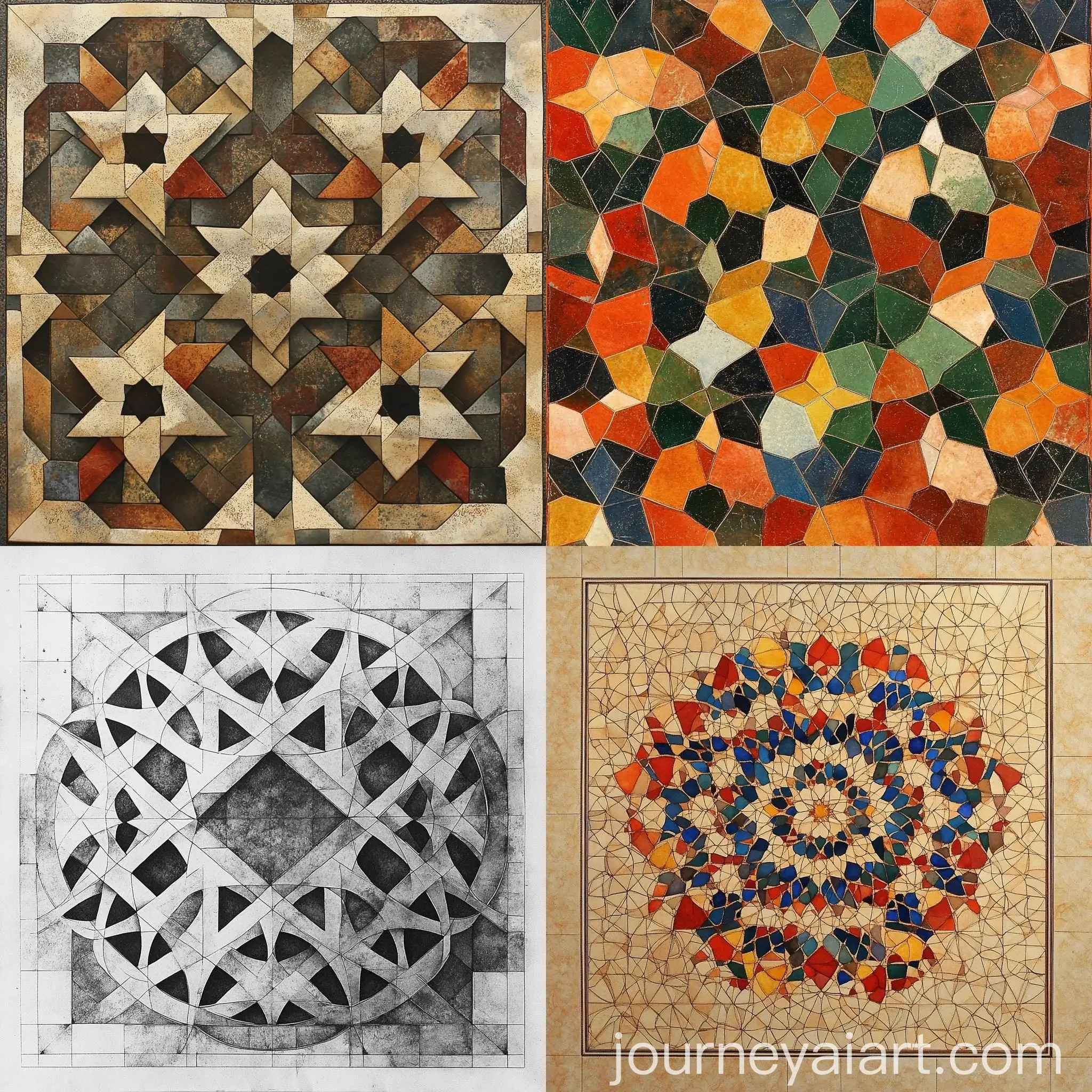
Islamic Geometry is a key component of Islamic art, characterized by complex, interwoven geometric patterns often used in architecture and decoration. Its roots go back to the 7th century, influenced by Islamic teachings that emphasize non-figurative forms in artistic expression. This style avoids the depiction of human or animal figures, focusing instead on mathematical precision and symmetry to symbolize the infinite nature of God. Over the centuries, Islamic geometric patterns have adorned mosques, palaces, and manuscripts, becoming one of the most recognizable aspects of Islamic culture.
The Historical Significance of Islamic Geometry in Art
Islamic Geometry is distinguished by its use of repetitive patterns based on mathematical principles. Common shapes include circles, squares, and stars, arranged in highly intricate, symmetrical designs. The most notable style, 'Girih,' consists of complex interlocking forms that often use fivefold or tenfold symmetry. These patterns are not only decorative but also symbolic, representing unity, balance, and the infinite. Different regions within the Islamic world have developed their own interpretations, from the Arab world's more abstract forms to the Persian tradition of more floral-based geometric styles.
Defining Features and Styles of Islamic Geometric Design
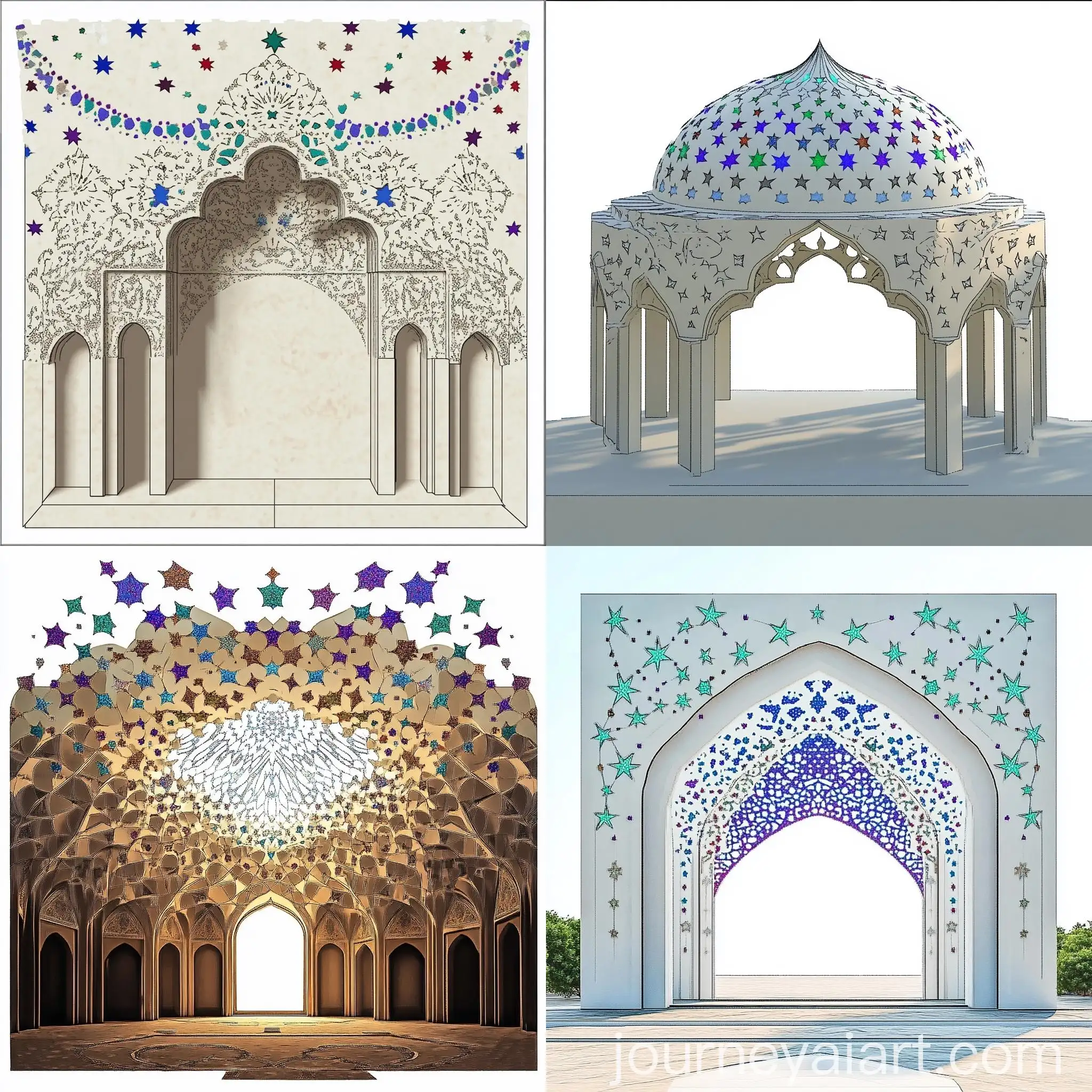
Islamic Geometry has transcended traditional art forms to influence modern art, design, and architecture. In contemporary architecture, geometric designs inspired by Islamic motifs are used to add a sense of timeless elegance and complexity to modern structures. Artists like M.C. Escher were famously inspired by Islamic geometric art, integrating its principles of tessellation into their works. Today, Islamic geometric design is widely used in graphic design, digital media, and fashion, reflecting its ongoing relevance and ability to inspire creativity.
Impact of Islamic Geometry on Modern Art and Architecture
Creating Islamic geometric designs has traditionally required deep knowledge of mathematical principles, but with AI tools, anyone can now generate these intricate patterns. AI art platforms allow users to input specific prompts, and by adjusting factors such as symmetry, shape types, and complexity, users can create custom geometric designs. By using the 'open in editor' feature on our image detail pages, you can tweak prompts to create your own interpretation of Islamic geometry—whether for personal projects, branding, or digital art.
How to Create Islamic Geometric Patterns with AI